
Finding Niche Communities On X: Checklist
Social Media Strategy
Learn how to effectively engage with niche communities on X, enhancing your presence and building meaningful connections.

Want to grow your presence on X? Start by finding the right niche communities. These are smaller, focused groups where meaningful conversations happen, and they hold the key to better engagement, stronger connections, and higher-quality followers. Here’s what you need to do:
Define your niche: Be specific about your goals and target audience. Narrowing down your focus helps you stand out.
Research keywords: Use niche-specific terms and long-tail keywords to locate active, relevant conversations.
Leverage X tools: Use Lists, advanced search, and saved searches to track specific communities and discussions.
Engage thoughtfully: Observe community norms, contribute value through helpful replies, and stay consistent.
Track results: Monitor metrics like engagement rates, follower quality, and content performance to refine your approach.
I Studied 16,000 X Accounts - This is How You Grow On X (Twitter)
Step 1: Define Your Niche and Target Audience
Before jumping into X, take a step back and define both your target audience and your purpose. Without a clear focus, you'll find yourself lost in irrelevant conversations that don't move the needle.
The most effective X users zero in on specific communities, building their reputation by engaging with intent and consistency.
Create a Clear Niche Profile
Start by identifying your community's core purpose and goals. Are you aiming to boost brand awareness for your SaaS startup? Position yourself as an expert marketing consultant? Or maybe connect with indie game developers who share your passion? Your purpose will guide every decision about which communities to join and how to interact.
Be specific about your objectives. Swap vague goals like "I want more followers" with something concrete, such as "I want to engage with 500 B2B marketing professionals working at companies with 50-500 employees." This clarity helps you locate the right groups and understand what matters to them.
Focusing on a narrow niche makes it easier to establish authority and attract a loyal audience. Instead of targeting a broad category like "fitness enthusiasts", you might narrow down to "strength training for busy parents" or "nutrition tips for remote workers." A micro-niche helps you stand out in a crowded space.
Your niche should align with your expertise and interests. Ask yourself: What topics could you discuss endlessly without losing enthusiasm? What challenges have you overcome that others might struggle with? What insights from your industry could provide real value to others?
Next, identify specific keywords and niche topics your audience is searching for, including long-tail variations. For instance, if you're in the productivity space, keywords might include "time management", "remote work hacks", or "work-life balance." These will act as your compass for discovering relevant conversations and communities.
Once you've nailed down your niche, focus on understanding who within that space will benefit most from your insights.
Understand Your Ideal Community Member
To truly connect, build detailed profiles of your ideal community members. This isn't about inventing fictional personas - it’s about understanding real people who share similar interests and challenges.
Think about their demographics, professional backgrounds, and platform behaviors. Are they startup founders in their 30s looking for quick solutions? College students studying computer science who engage with visual content? Marketing managers at mid-sized companies who prefer data-backed discussions? Knowing these details helps you find where they hang out on X and tailor your content to their preferences.
Dive deeper into their pain points and challenges. What keeps them up at night? What problems are they eager to solve? What questions do they ask repeatedly? When you understand their struggles, you can position yourself as a helpful resource rather than just another voice in the crowd.
Pay attention to their conversation style and language. Do they use specific industry terms? Are they formal or casual in their tone? Do they gravitate toward data-driven insights or personal stories? Mirroring their communication style makes your interactions feel more natural and relatable.
Consider their goals and aspirations. A freelance graphic designer might want to land better-paying clients, build a standout personal brand, or sharpen their skills. By understanding what drives them, you can participate in conversations that genuinely support their ambitions.
Finally, think about when they're active on X. Are business professionals engaging during their morning commute or lunch breaks? Are developers more likely to be online in the evenings? Timing your interactions to match their activity patterns ensures your efforts land when they're paying attention.
Step 2: Research Keywords and Community Conversations
Once you've nailed down your niche and identified your target audience, the next step is to dive into how your community communicates. Every niche has its own "language" - a mix of trending topics, buzzwords, and conversational patterns. Understanding these subtleties is essential to finding the right discussions and joining them in a way that feels natural.
Keyword research here goes far beyond just hashtags. It’s about uncovering the specific terms and phrases that resonate with your audience. This kind of research helps you discover where the meaningful discussions are happening and shows you how to contribute in a way that adds real value.
Go Beyond Basic Hashtags
Generic hashtags like #marketing or #tech are overcrowded and often lead to surface-level conversations. Instead, focus on long-tail keywords and niche-specific phrases that point you toward deeper, more targeted discussions.
For example, using compound keywords and industry-specific jargon - like "SaaS product-market fit" or "CI/CD pipelines" - can help you find conversations that are both precise and relevant. These longer, more detailed terms often attract people discussing specific challenges, making it easier for you to step in with helpful insights.
Event-based and location-specific keywords are also worth exploring. Keywords like "AWS re:Invent" or "startup founders NYC" lead to highly active, short-term communities centered around shared experiences. These can be goldmines for connecting with others who share your interests.
Don’t overlook problem-focused keywords either. Phrases like "email deliverability issues", "team burnout", or "client communication challenges" highlight real pain points your audience is facing. Joining these conversations positions you as a resourceful and approachable problem solver.
Finally, keep an eye on emerging terms in your niche. New tools, methodologies, or trends often spark fresh keywords that haven't yet hit the mainstream. Early adoption of these terms not only keeps you ahead of the curve but also connects you with forward-thinkers in your industry.
Monitor Trending Discussions
Real-time monitoring is your secret weapon for staying in the loop. Once you've identified your keywords, keeping tabs on current trends ensures you're jumping into discussions while they're still active and engaging.
Take advantage of X's advanced search features. For instance, a search like "marketing automation" near:NYC within:7d can help you pinpoint recent conversations about marketing automation in New York City. You can also save these searches for quick access later.
Not all hashtags are created equal, so monitor their performance. Some may be popular but filled with promotional content, while others with lower usage might foster more genuine and interactive discussions.
Don’t forget to check reply threads on popular posts in your niche. Often, the most valuable conversations happen in the comments, where people share personal experiences, ask specific questions, or offer practical advice. These threads can provide a wealth of insights and opportunities to engage meaningfully.
Pay attention to community activity patterns as well. Some groups are most active during work hours, while others come alive in the evenings or on weekends. Timing your participation to match these patterns can maximize your visibility and engagement.
Lastly, look for ways to connect trending topics with your niche. For example, if a major news event impacts your industry, join the conversation by sharing your perspective. X's trending topics feature is a great tool for spotting when your niche keywords are gaining broader attention. This is your chance to engage with new audiences who are eager to learn more about your expertise.
Step 3: Use Tools and Features to Discover Niche Communities
Once you've nailed down your keywords and identified key conversation trends, it's time to use tools that make finding and engaging with niche communities easier. By combining X's built-in features with AI-powered tools, you can jumpstart your efforts and connect with the right people from day one.
Use X's Lists and Search Features
X's Lists feature is perfect for organizing and tracking niche conversations. By grouping accounts into categories, you can focus on specific topics without getting lost in the clutter of your main timeline.
For example, if you're in fintech, you could create lists like "Fintech Founders", "Crypto Developers", or "RegTech Experts." This kind of segmentation helps you keep tabs on various sub-communities within your broader niche and understand how different groups interact.
Advanced search operators are another game-changer. Use from:username to view posts from specific thought leaders or to:username to see who’s engaging with them. The filter:replies operator is especially useful for finding people who are actively participating in conversations rather than just posting content.
You can also use geographic and time-based searches to uncover location-specific communities. For instance, searching "startup funding" near:"San Francisco" within:3d will show recent discussions about startup funding in the Bay Area. This is great for connecting with local business hubs or industry-specific groups.
Don’t forget to set up saved searches for your most important keywords. These allow you to monitor ongoing discussions and spot new voices worth following. Additionally, exploring follower networks can help you find tight-knit groups. When you identify someone active in your niche, check out who they follow and who follows them back - this often reveals engaged clusters of people with shared interests.
Once you’ve mastered X’s native tools, you can take things further with platforms like GrowX, designed to streamline community discovery and engagement.
Streamline Community Discovery with GrowX
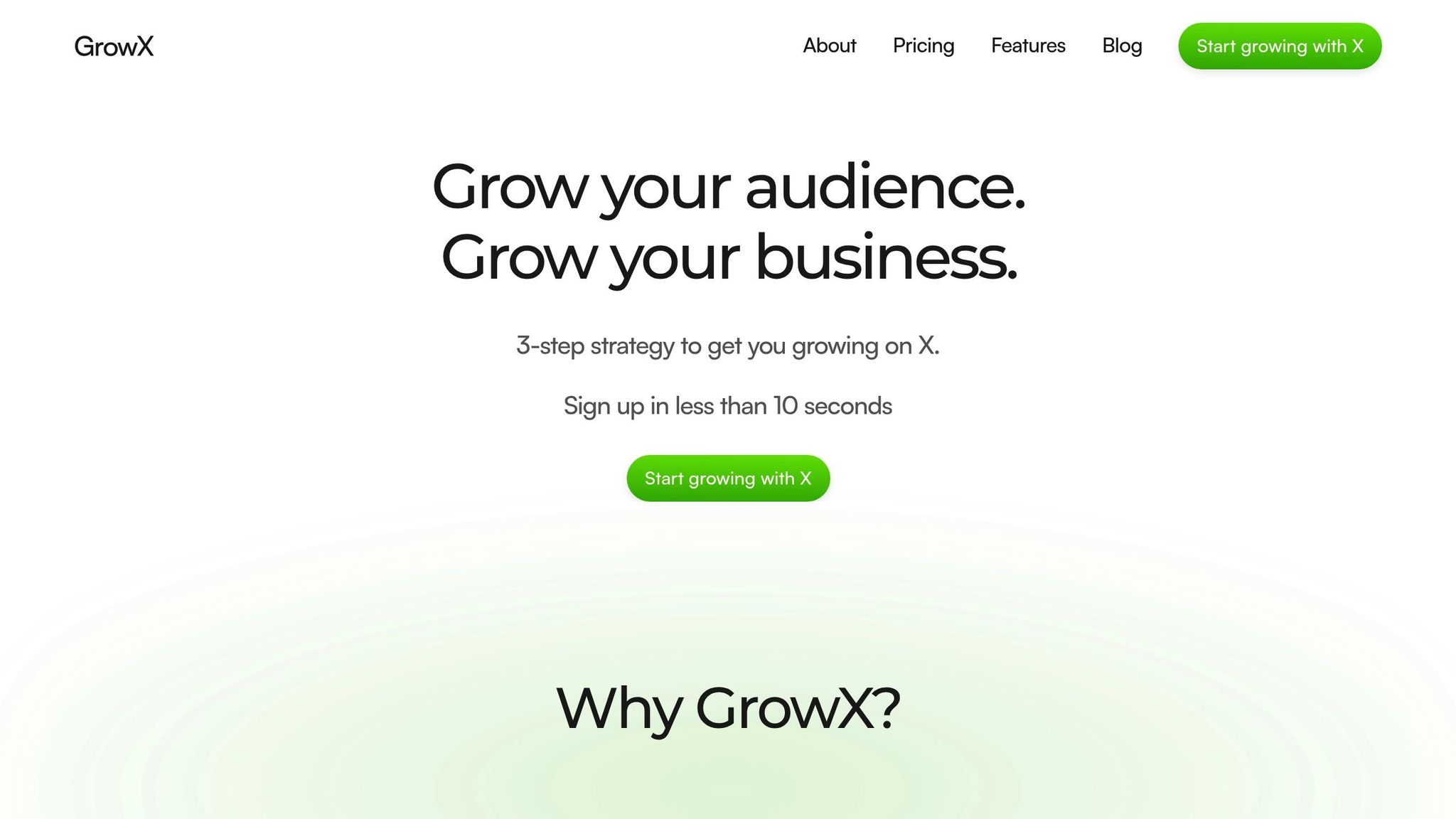
After using X’s built-in features, advanced tools like GrowX can save you time and effort in finding and connecting with niche communities.
GrowX Community acts as a discovery engine, connecting you with users who share your interests and goals. Instead of manually searching for hours, you can quickly find relevant accounts and start building relationships. This creates a ripple effect, helping you not only discover communities but also become an active participant within them.
The GrowX Engage tool simplifies how you contribute to conversations. It offers customizable reply suggestions that feel genuine, so you don’t have to stress about crafting the perfect response. This is especially helpful when you’re new to a community and still figuring out its tone and communication style.
What makes GrowX Engage stand out is its ability to tailor responses to specific contexts. For example, if you’re joining a technical discussion about API development, the tool can suggest replies that showcase your expertise. On the other hand, if the conversation is more casual - like sharing experiences about entrepreneurship - it adjusts to a friendlier, more supportive tone.
GrowX Create complements your engagement efforts by helping you produce content that resonates with your target audience. It analyzes trending topics and styles within your niche, ensuring your posts align with what people care about right now. This boosts the chances of your content being noticed, shared, and followed.
The scheduling feature in GrowX Create also ensures you’re posting at times when your audience is most active, increasing the likelihood of meaningful interactions and building stronger connections.
Step 4: Observe and Adapt to Community Norms
Before diving into conversations, take a moment to observe how each community operates. Think of it like starting a new job - you wouldn’t jump into meetings without first understanding the team’s culture, communication style, and unwritten rules. This approach not only shows respect but also helps you contribute in a way that’s meaningful and well-received. By understanding these dynamics, you’ll set yourself up to engage effectively and build genuine connections.
Identify Preferred Content Formats
Every community has its go-to content style, whether it’s snappy text posts, detailed threads, or visually-driven updates. For example, tech groups often lean toward educational threads filled with code snippets or diagrams. Entrepreneurship communities might appreciate personal stories and lessons learned, while creative spaces thrive on visual content and behind-the-scenes updates.
To figure out what works, take a scroll through the posts that have garnered the most engagement from key community members over the past few weeks. Pay close attention to patterns in format, length, and style. Notice what types of posts spark the most replies versus those that simply gather likes - replies often signal deeper interaction and genuine interest.
Understand Tone and Engagement Rules
Once you’ve nailed down the preferred content formats, focus on matching the community’s tone. Each group has its own way of communicating, from formal and data-driven exchanges to laid-back and personal conversations.
Professional communities (like those in finance or legal tech) often favor discussions grounded in data and evidence. Members typically cite sources, share well-reasoned insights, and maintain a respectful tone, even in debates. Casual language or unsupported claims can come across as unprofessional in these spaces.
Startup communities tend to have a more relaxed, relatable vibe. Members share personal challenges, celebrate small wins, and often use humor to connect. That said, authenticity is key here - focusing only on successes without acknowledging struggles might make you seem out of touch with the realities of the startup world.
Creative communities thrive on experimentation and positivity. Members often give constructive feedback and use encouraging language, avoiding harsh criticism. Understanding this collaborative spirit will help you contribute in a way that feels aligned with the group’s values.
Pay attention to how disagreements are handled and whether specific jargon is commonly used. Adjust your tone and language to fit the group’s style, ensuring your contributions resonate.
Step 5: Engage and Build Relationships
Once you've familiarized yourself with the norms of your chosen community, it's time to dive in and start engaging thoughtfully. Use what you've learned to build genuine relationships by contributing value first - before even thinking about promoting yourself.
Start with Helpful Replies
Your initial interactions should focus on being genuinely helpful. Offer clear insights, ask thoughtful questions, and provide concise encouragement to others.
For example, if someone asks about email open rates, share a specific tip, like how shorter subject lines can improve engagement. If a member of a startup group shares a small victory, celebrate their success and ask a follow-up question to show you're interested in their journey. These small but meaningful interactions lay the groundwork for trust.
Make it your mission to add value with every reply. If someone shares a problem they’re facing, offer practical advice or point them toward a useful resource (as long as it’s not self-promotional). When you spot an engaging discussion, chime in with your perspective or ask questions that encourage others to share more.
The goal? Become known as someone who consistently enriches conversations. Over time, people will start recognizing your contributions and looking forward to what you have to say. This kind of recognition is far more powerful than any direct promotion.
Contribute Consistently
Building strong relationships in niche communities takes time and regular effort. Sporadic participation won’t cut it - you need to show up consistently and contribute meaningfully.
Set aside a small, dedicated block of time each day to engage with your communities. While you don’t need to create original content every day, you should stay active by responding to posts, joining discussions, and staying in the loop with what’s trending in the space.
Remember, quality beats quantity. Crafting three thoughtful, well-considered replies is far more impactful than dashing off ten generic comments. Take the time to read posts carefully and ensure your responses add real value to the conversation.
Pay attention to what resonates. Maybe your personal anecdotes spark the most engagement, or perhaps asking open-ended questions leads to richer discussions. Use these observations to fine-tune your approach, focusing on what helps you connect more deeply with others.
If you’re juggling multiple communities, tools like GrowX Engage can help you tailor your responses to match the tone and style of each group. This ensures your interactions feel natural and aligned with the unique vibe of each community.
Step 6: Track Results and Refine Your Approach
Building strong niche connections isn't just about effort - it's about knowing what works and fine-tuning your strategy along the way.
Monitor Key Metrics
After putting in the work to engage with your niche communities, it's time to measure the impact. Keeping an eye on specific metrics can help you understand how well your efforts are paying off.
Follower growth: This isn't just about numbers; it's about quality. Are the new followers active in your niche? Are they engaging with your content? A steady stream of 10–15 relevant followers is far more valuable than hundreds of random ones who don’t interact with your content.
Engagement rates: To see if your content resonates, calculate your engagement rate: (total engagements ÷ follower count) × 100. For niche communities, a healthy rate falls between 3–8%, which is far better than the 1–3% typical for broader audiences.
Reply quality and frequency: Are people recognizing your contributions? Look for thoughtful replies, meaningful discussions, and even direct responses to your comments. These interactions often say more about your influence than raw numbers.
Content performance metrics: Identify which types of posts perform best in each community. For instance, technical tutorials might thrive in developer groups, while personal stories could spark deeper conversations in entrepreneurial circles.
Mention tracking: Are others starting to tag you in discussions or ask for your input? Organic mentions are a clear sign that you're becoming a trusted voice in your niche.
Iterate and Improve
Once you’ve gathered data, use it to refine your approach and make smarter decisions moving forward.
Adjust your content based on what the numbers tell you. For example, if your how-to guides consistently outperform opinion pieces in tech groups, focus on creating more educational material. On the other hand, if personal anecdotes drive engagement in startup communities, share more of your experiences and lessons learned.
Revisit your posting schedule from Step 5. If your metrics reveal that certain communities are most active at specific times - like Tuesday mornings for design groups or lunchtime for marketing professionals - adjust your timing to match their activity patterns.
Try branching out with new discovery methods. If a specific hashtag or search term helped you find engaged communities, explore related keywords. Similarly, if following certain industry leaders led you to valuable discussions, look for other influential voices in similar niches.
If you're using tools like GrowX Create, take advantage of their analytics to fine-tune your content even further. These insights can help you craft posts that align with the unique preferences of each community.
Make it a habit to review your metrics monthly. Look for trends: What types of content or strategies worked best? Which communities showed the most potential for long-term engagement? Use this information to double down on what’s working and pivot away from tactics that aren’t delivering results.
Conclusion: Building Lasting Connections with Niche Communities
Connecting with niche communities on X isn't just about increasing your follower count - it’s about cultivating relationships that elevate your presence and credibility. The six-step approach outlined earlier provides a practical path to transition from an outsider to a respected voice within your chosen circles.
Start by pinpointing your niche and defining your target audience. This clarity helps you avoid wasting time on groups that don’t align with your goals. Once you’ve identified your audience, it’s time to dig deeper - moving beyond generic hashtags to uncover meaningful conversations.
Discovery can feel overwhelming, but X’s built-in tools, along with resources like GrowX, make the process more manageable. The goal is to go past surface-level searches and locate spaces where genuine, in-depth discussions are happening.
Take the time to observe and understand the norms of your chosen community. Learning how the group interacts and communicates helps you integrate naturally and ensures your contributions are well-received.
From there, focus on consistent, meaningful engagement. By regularly sharing thoughtful replies and offering insights, you’ll gradually establish a recognizable and respected presence.
Finally, keep an eye on the numbers. Metrics like engagement rates, the quality of replies, and organic mentions can reveal what’s working and where adjustments are needed. In the end, forming authentic connections with a targeted audience is far more impactful than reaching a larger but less engaged crowd.
FAQs
How can I find niche communities on X that match my interests or industry?
To discover niche communities on X, start by pinpointing keywords that align with your interests or industry. Use these keywords to search for hashtags, trending topics, and ongoing discussions. Look out for active conversations and accounts that frequently engage with topics in your area of interest.
Follow creators, thought leaders, and community-focused accounts to broaden your network. Interacting with posts - whether through likes, comments, or shares - can naturally help you become part of these communities. If you're looking for a more efficient way to connect, tools like GrowX offer AI-driven solutions to help you find and engage with the right audience.
How can I effectively engage with niche communities on X in a meaningful way?
To connect meaningfully with niche communities on X, focus on crafting content that truly speaks to your audience's interests and needs. This could include educational posts that inform, engaging threads that spark discussion, or timely updates that keep followers in the loop. The key is to be consistent and authentic in your interactions - take the time to respond thoughtfully to discussions and contribute in ways that genuinely add value.
Incorporate relevant hashtags to reach people who share similar interests. Joining trending community hashtags can also boost your visibility and help you find your tribe. Building real relationships matters, so acknowledge and show appreciation for others' contributions. Collaborating with creators or influencers in your niche is another great way to strengthen connections and nurture a sense of belonging within the community.
How can I track and improve my engagement in niche communities on X?
To keep tabs on and boost your engagement in niche communities on X, pay attention to a few essential metrics: engagement rates, growth in followers within the community, and the tone of interactions. Checking these metrics regularly can reveal what clicks with your audience and guide you in tweaking your strategy as needed.
Consistency makes all the difference - join conversations often, share meaningful content, and interact genuinely with others. By keeping an eye on your progress and staying active, you can forge deeper connections and strengthen your presence in your niche.